
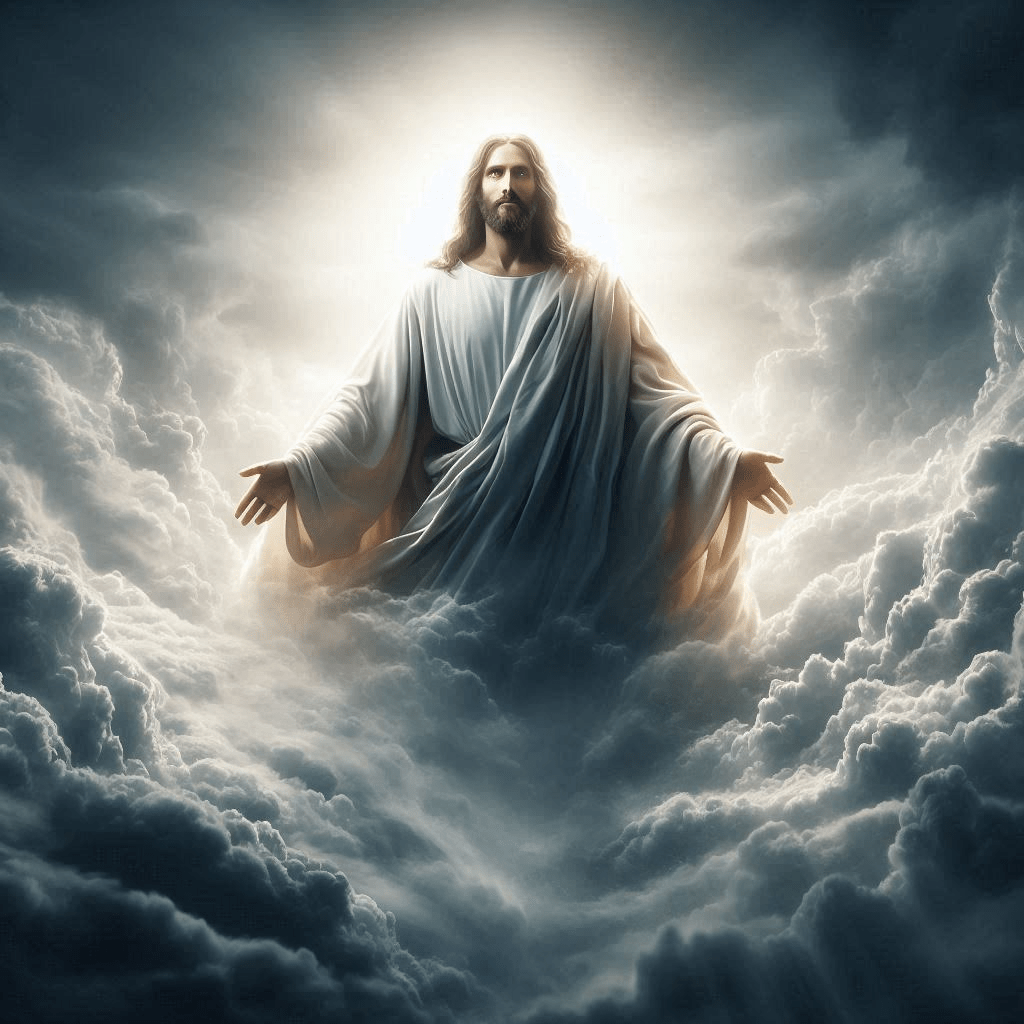
Peter had just confessed Jesus as the Messiah. After confirming Peter’s confession Jesus began to talk about his death and resurrection. He told the disciples he must be killed and raised from the dead. The disciples, especially Peter, did not like to hear this but Jesus explained it must happen to fulfill scripture.
From here Jesus began to teach them what his followers must do, and how they should live. He said people must deny themselves, pick up their crosses, and follow him even though it meant the road would be hard. He asked what it would profit a person to gain the whole world at the cost of his soul.1
Some Standing Here Will Not Taste Death
He then stated that he would come again in glory with the angels as a judge and he would judge harshly those who were embarrassed of his Gospel.2 It is at this point that he said something that has been debated for over 2,000 years.
Truly, I say to you, there are some standing here who will not taste death until they see the Son of Man coming in his kingdom.”3
Jesus had just finished talking about coming in all his glory with the angels and appears to say there are some who were standing there with him who would live to see this happen. This has been interpreted as Jesus talking about the parousia. Most people, excluding full preterists, do not believe that Jesus’ second coming has occurred, so what does this mean? Was Jesus wrong about the timing of his second coming?
What the Skeptics Claim
Skeptics use this verse to claim that Jesus was wrong about the timing of the parousia, and if Jesus was wrong he cannot be God. Jesus would eventually go on later in Matthew to say he didn’t know the hour of his return.4 Between these two verses the skeptics believe they have built a case against Christ being God. (I’ve already written an article about Jesus’ claim he didn’t know the hour of the parousia, which you can read here.)
As Christians we believe that Jesus cannot be wrong, nor could he have lied or tried to deceive the disciples, so there must be an explanation to what can be a troubling verse for many people.
Four Possibilities
Several different possibilities have been put forth as an explanation for this seemingly problematic verse. Some of these include:
- Jesus was talking about the destruction of the temple in AD 70
- Jesus was talking about his resurrection and his post-resurrection body
- Jesus was talking about the coming of the Holy Spirit at Pentecost
- Jesus was talking about his transfiguration
There are more interpretations, but these are probably the four most notable and the most likely. Let’s take a look at these possibilities.
The Destruction of the Temple:
This would be the full preterist view. Full preterists believe that all of the prophesies in the book of Revelation were fulfilled in AD 70, including Jesus’ parousia. Unlike the partial preterists, who hold that Jesus’ second coming is yet to come, full preterists believe Jesus’ second coming was a spiritual second coming in AD 70 when the temple was destroyed.
Neither preterist positions answer the question at hand. If Jesus’ second coming was spiritual it does not meet his promise to come on the clouds with angels in all his glory, so the full preterist position cannot be the answer. Likewise, if Jesus’ second coming is yet to come we are left with the same question we are trying to answer.
Resurrection and Post Resurrection Body:
The apostles, and at least 500 other people, saw the resurrected Christ. We know that after the resurrection there was something different about Jesus’ appearance because even his closest friends did not recognize him until he spoke.5
Mark 16:12 goes so far as to say that Jesus appeared “in another form” to two apostles. Most likely this is another case of his not being recognized until he spoke. In addition, he also had the ability to appear and disappear.
He did not have any earthly limitations, yet he was not a ghost, he still had a physical body when he appeared but it seems as if it was somehow different.
I don’t believe this is the answer, but it is hard to dismiss this as a possibility so we’ll come back to this one later.
Pentecost:
2 And suddenly there came from heaven a sound like a mighty rushing wind, and it filled the entire house where they were sitting. 3 And divided tongues as of fire appeared to them and rested on each one of them.
Something truly miraculous and amazing happened at Pentecost when the Holy Spirit was poured out on everybody, but this was in fulfillment of another promise Jesus had made to send his helper.6
While there was a loud rushing wind and a loud noise, similar to what Jesus described would happen at his second coming, this was the third person of the Trinity and probably cannot be considered Jesus coming in his Kingdom. At least by itself, we will also come back to this one later as well.
The Transfiguration:
The transfiguration is written about in all three synoptic Gospels right after Jesus’ questioned statement, and they all say it happened several days after the statement we have been discussing. This seems to fill all of the criteria and, in my opinion, this is the most likely answer. Let’s look at this a little deeper.
A glorified Jesus appeared with a glowing face and in shining white clothing with two of the Old Testament’s greatest heroes, Moses and Elijah. A cloud descended over them and then the Father spoke words similar to what he spoke at Jesus’ baptism. Clearly this was a vision of heaven and most likely this fulfilled Jesus’ promise that some would not see death before seeing the glorified Christ in his Kingdom.
Peter certainly believed this was a glimpse of heaven:
16 For we did not follow cleverly devised myths when we made known to you the power and coming of our Lord Jesus Christ, but we were eyewitnesses of his majesty. 17 For when he received honor and glory from God the Father, and the voice was borne to him by the Majestic Glory, “This is my beloved Son, with whom I am well pleased,” 18 we ourselves heard this very voice borne from heaven, for we were with him on the holy mountain. 7
Final Thoughts
While I believe the transfiguration is the most likely answer to the question, I don’t think that Jesus’ appearances in his post-resurrection body should be dismissed. There was obviously something different about Jesus during these appearances, something that none of the witnesses could put their finger on, and he was not restricted in his movements within the earthly sphere.
Does this rise to the level of seeing Jesus coming in his Kingdom? Maybe not by itself, but there is also a third possibility:
The third possibility is that Jesus was talking about a combination of his post-resurrection appearances in his resurrected body and the coming of the Holy Spirit at Pentecost. Between these two possibilities people saw Jesus in a glorified body and something otherworldly happened when there was a violent wind, tongues of fire, and the Holy Spirit poured out on believers at Pentecost.
What we end up with is two scenarios which show that Jesus was not mistaken about the timing of his second coming:
- He appeared in his glory at the transfiguration to three of his apostles shortly after making that promise.
- He appeared in a glorified form of some sort to hundreds of people after his resurrection, and the Holy Spirit was poured out on believers in a supernatural event at Pentecost.
No matter which position you take, the skeptics who use this verse as “proof” that Jesus was mistaken are mistaken themselves.
If you enjoyed this content please scroll down and comment, subscribe, and share! You can also follow Cross Talk on Facebook by clicking on the link in the sidebar on the Cross Talk home page.

 Cross Talk
Leave a Reply