
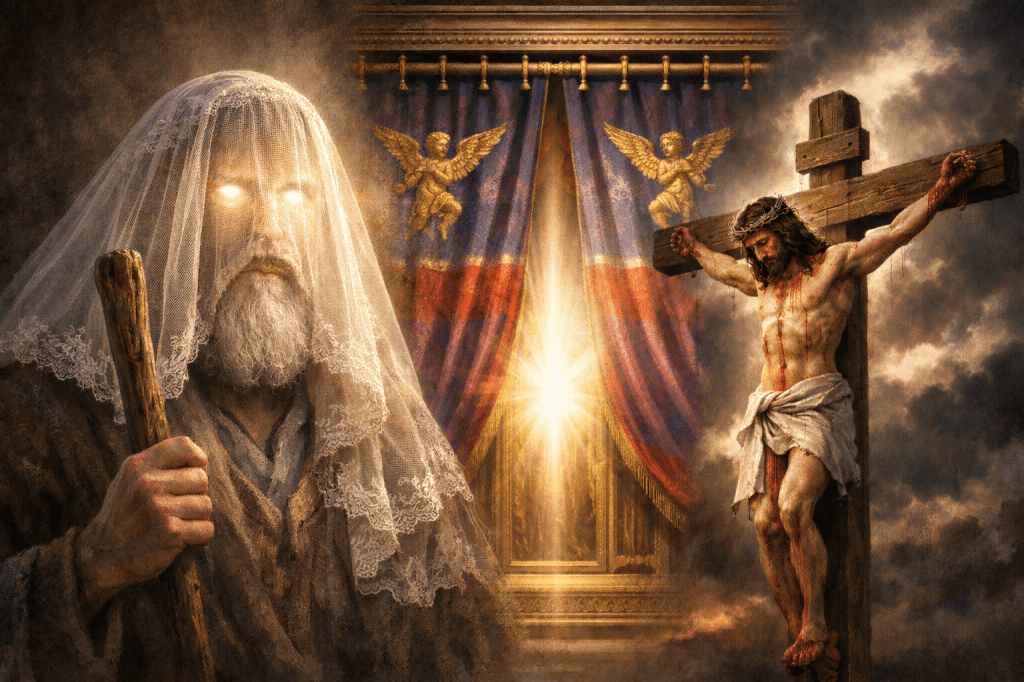
Unveiled in the Garden
8 And they heard the sound of the Lord God walking in the garden in the cool of the day1
What a beautiful image of the intimacy and fellowship shared between Adam, Eve, and God before the fall. There is debate over whether this was a pre-incarnate Jesus walking in the garden or if it is a metaphor for God’s closeness to Adam and Eve, but that discussion is for another post.
Sadly, that closeness was broken when Adam and Eve ate from the Tree of the Knowledge of Good and Evil. God banished the first couple from the garden and no longer could sinful man commune directly with the Holy God. Man now needed an intercessor to speak on his behalf.
The Veil of Moses
After the fall and before Moses, some people like Noah and Abraham received revelations from God. But the first great intercessor was Moses, the one man who spoke “face to face”2 with God, and also the man who brought the people the law.
After spending forty days with God on Mount Sinai, Moses came down to share God’s law with the people. Moses’ face shone with the very glory of God and the people were afraid. After sharing God’s message Moses covered his face with a veil.
Moses remained veiled until he would go in to talk to God. At that point he would remove the veil and then replace it when he left God’s presence. Whenever Moses spoke God’s word to the people he would remove the veil, only to return it again when he finished.3
Moses’ veiling and unveiling represents man’s separation from God. The veil was lifted only when Moses was in the presence of God and when he spoke God’s word to the people. It was as if the people were allowed to behold a representation of the glory of God in Moses’ glowing face, but were cut off from seeing the glory of God when Moses wasn’t speaking for God.
The Curtain of the Temple
When the Hebrews finally entered the Promised Land and the temple was built, the separation between man and God was symbolized by the large curtain that separated the Holy Place from the Most Holy Place.
The Ark of the Covenant with the Mercy Seat (which represented God’s presence) was located behind the curtain, and man was not allowed to enter into the presence of God. In essence, Moses’ veil was replaced by the temple curtain.
The Levites had become the intercessors between God and man. More specifically the High Priest, who was only allowed to enter the Most Holy Place once a year, on the Day of Atonement, on behalf of the people.
The High Priest would have to perform the proper cleansing ceremony and offer sacrifices; the first sacrifice for himself and then another sacrifice for the people. Man was too sinful and unclean to approach God on his own for forgiveness. Forgiveness required a blood sacrifice.
The Christ of God
This changed when Jesus died on the cross. The curtain was torn in two and the symbol of the separation between God and man was destroyed. Even though we still sin, we no longer need a human intercessor between ourselves and God, because Jesus has become our mediator4.
21 For our sake he made him to be sin who knew no sin, so that in him we might become the righteousness of God.5
Jesus speaks on behalf of all who call him Lord and Savior. Sin still pushes us away from God, but we can now go directly to Him for forgiveness. There is no longer a need for someone to perform a cleansing ritual or a blood sacrifice on our behalf because Jesus was the final atoning sacrifice for our sins.
If you enjoyed this content please scroll down and comment, subscribe, and share! You can also follow Cross Talk on Facebook by clicking on the link in the sidebar on the Cross Talk home page.

 Cross Talk
Leave a Reply