
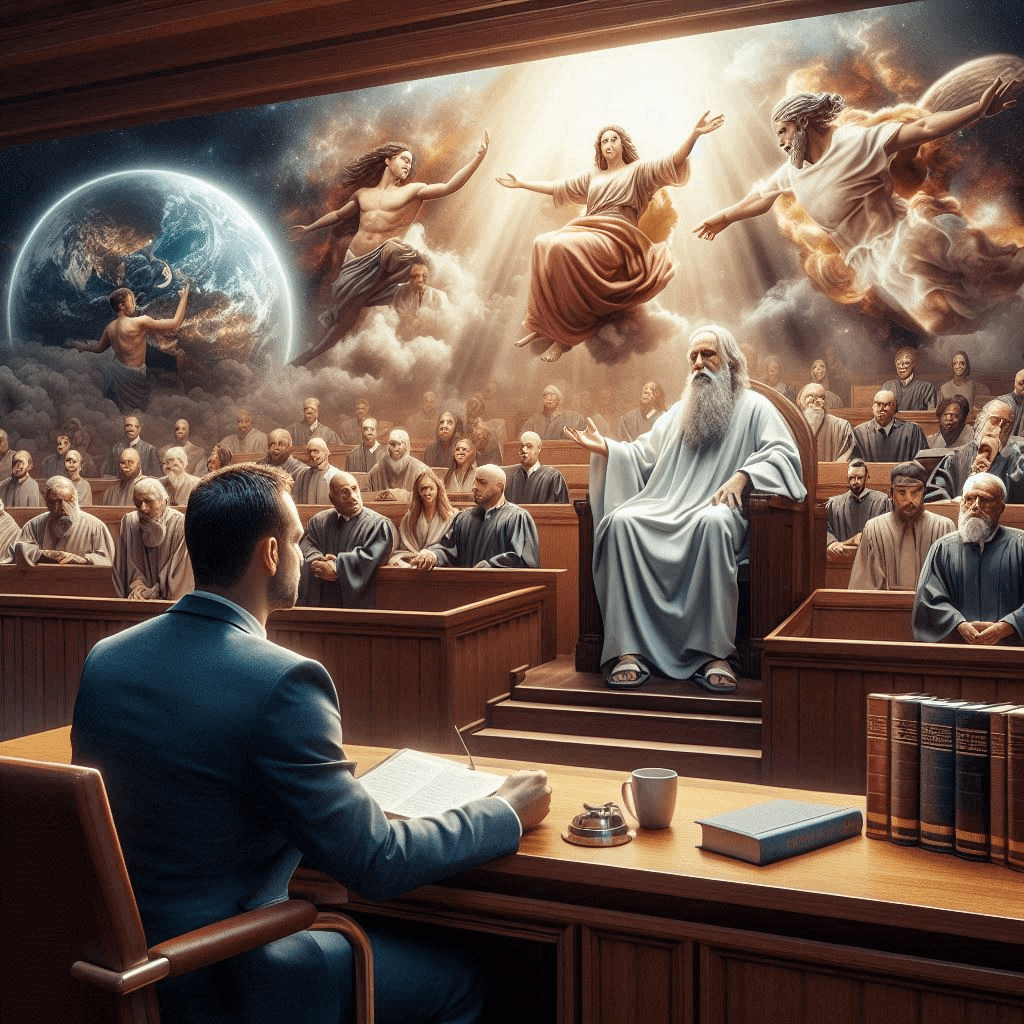
Judging God?
I didn’t ask to be born, I had no choice in the matter. God made me this way. If I didn’t chose to be born and God made me this way, then how am I to blame for my actions? Why can’t I do what I want? Why shouldn’t I behave how I want? Why is this a sin? Why is that a sin? How can God judge me when he is the one who made me this way?
If anybody should judge, shouldn’t we be the ones who judge God for making such flawed people? Shouldn’t God be the one on trial because he is responsible for the shortcomings of man? Why did God create mankind when he knew they would be flawed and would sin? Why would a moral God make an individual he knew was damned before creating them? It is all God’s fault!
I see these types of questions all the time in the online community. In this life people will say or do just about anything to avoid blame when they are in the wrong. They will even let the consequences of their actions fall on another person if it means escaping judgment or punishment themselves.
This is nothing new, Adam tried to blame God after he ate the fruit in the garden, and it has been going on ever since.
Their logic is simple:
- God created man
- Man is flawed
- God created flawed man
- God is responsible for the actions of flawed man
Ironically, their logic is flawed. Which is not surprising since it comes from flawed people. When God created Adam and Eve they were at that time perfect. However, being a loving God he made them free and with freedom comes responsibility. People who adhere to the philosophy that God created flawed people are treating freedom as a flaw.
Couldn’t God Have Made a World Where Sin was Impossible?
Couldn’t God have made a world where it was impossible to sin? Probably, but would that have been a better world? The answer isn’t as simple as a skeptic might think.
I can only come up with two scenarios for creating a world where it is impossible to sin: Either we would live in a world where man would be incapable of free thought and emotions, or we would live in a world with no laws.
A World with No Laws
We are only briefly going to touch on the possibility of a world without laws because the problems are obvious.
Yes, God could have created a world without laws so that everything would be permissible. That would have also solved the problem of sin because there would be no sin in a world where everything goes. Imagine a world where you could do whatever you wanted and there would be no repercussions, no judgment, sounds wonderful doesn’t it?
But just because something is permissible does not mean it is good.1 Murder, rape, theft, and more, all of these would be permissible and that doesn’t sound like a world any of us would want. Cain would not have sinned by killing Abel.
It doesn’t sound so wonderful after all, which means we need a world with laws. So then the next option would be to create a world in which man did not have the freedom to sin.
Creating Man Without the Capacity to Sin
In the Garden of Eden God gave Adam and Eve just one law and they chose not to follow it.
The argument goes that if Adam and Eve weren’t flawed when God made them they wouldn’t have given in to temptation. After all, couldn’t God have created mankind in a way in which it would be impossible to sin?
Yes, I am sure God could have created the world that way, but that would mean mankind would not be free. We would be like lobotomized drones who all think, feel, and act the same.
We would be industrious like ants, or loyal to the queen bee like the worker bees, who act by instinct alone with no thought, they just get through the day doing their jobs. However God did not want us to be like ants or bees so he made us in his own image.
He wanted us to have the freedom to choose to be industrious like ants and loyal like worker bees. But with this freedom we can also choose to be lazy or disloyal. He gave us the greatest gift of all, besides life itself, and we used it to be disloyal to him.
God gave us the intelligence to explore the universe, discover the intricacies of the cell, and yes, even question his existence. Adam and Eve could have used their minds to begin all this exploration, and yet they chose to do it the quick way. Forgetting they were already made in God’s image, Satan’s promise of quick godlike knowledge was too much for them to resist.
Living as an ant or a drone bee does not seem like the type of life most of us would want.
Misplaced Blame
God loved us too much to make either type of world we just discussed, so he gave us freedom, but Adam and Eve decided to do things their own way. And we have people who want to turn around and blame God for this? In essence they are blaming God for giving us freedom, more so than blaming God for our ultimate actions, although they seem to be missing that point.
The value of freedom is attested by the blood of the millions of people who have fought and died for its cause over the centuries, it is not a flaw. People love freedom until the consequences of their actions come due, and then they are looking to make God a scapegoat.
This is misplaced blame. Most of the people who are asking the questions I quoted above know what they are doing is wrong or sinful, but they are looking for an excuse to shift the blame so they won’t have to bear the punishment for their sins. They are acting just like Adam did.
They do not wish to change to please God, they wish to continue in sin to please themselves, and they want God to be okay with that because, after all, he’s the one that created them that way…
If you enjoyed this content please scroll down and comment, subscribe, and share! You can also follow Cross Talk on Facebook by clicking on the link in the sidebar on the Cross Talk home page.
- See 1 Corinthians 10:23 ↩︎

 Cross Talk
Leave a Reply