
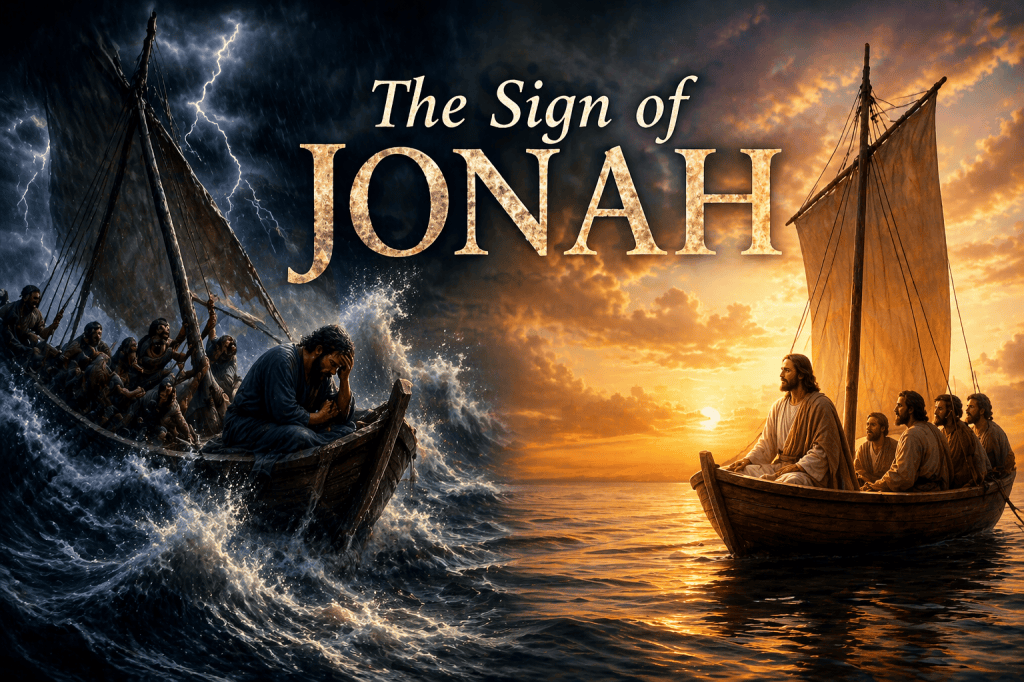
The Pharisees came to Jesus one day and asked Him to show them a sign to prove he was the Messiah (Matthew 12:38). Jesus told them that He would give them no sign, but the sign of Jonah. “For just as Jonah was three days and three nights in the belly of the great fish, so will the Son of Man be three days and three nights in the heart of the earth” (Matthew 12:40 ESV).
Because Jesus compared Himself to Jonah, we tend to think of Jonah as a type, or foreshadowing, of Christ. Jesus made this comparison, so let’s take a look at the parallels and the contrasts between Jesus and Jonah.
The Parallels
When Jesus mentioned the sign of Jonah to the Pharisees, He was referencing Jonah being in the belly of a great fish for three days. Although they wouldn’t have understood it until after the resurrection, Jesus was comparing Jonah’s time in the great fish with His time in the heart of the ground after His crucifixion. This is the sign He would give them. They would have to wait for it, but we have the benefit of looking back at it.
When we begin the book of Jonah, we see there are a couple of other parallels: Both men fell asleep on a boat during a violent storm while all the others around them panicked, and the sea was calmed miraculously. Both men were willingly sacrificed to save others. Jonah volunteered to be cast into the sea to save the others in the boat. He didn’t resist. Jesus willingly went to the cross to save mankind. He also didn’t resist.
The Parallels End
Sometimes we look at these parallels and we read more into them than we should. As we continue through the book we realize this is where the parallels between the two men end. We start to see the stark contrasts between them.
Jonah and Jesus were sleeping for very different reasons, and the seas were calmed for different reasons.
Jonah’s Story
Jonah was sleeping peacefully during the storm because he was apathetic and indifferent to his situation. He was spiritually deficient. He didn’t care, and he was running from God. When Jonah was awakened by the captain of the boat, he knew instinctively he was the cause of the storm.
He told the captain to throw him overboard to save the others. Once Jonah was thrown into the sea, the wrath of God was appeased. The seas were calmed, and the men in the boat were saved. In this one instance, he was willing.
God rescued Jonah from the sea by appointing a great fish to swallow him. After being in the belly of the fish for three days, he was vomited up on the shore. At this point the reluctant Jonah finally agreed to go to Nineveh to preach repentance to the people there.
The people of Nineveh repented and God forgave them. Jonah accomplished the mission God had sent him on, but he wasn’t happy. Jonah actually became angry at God for forgiving the Ninevites. He told God that the reason he didn’t want to go to Nineveh in the first place was because he knew God would forgive them if they repented.
In Jonah’s mind the Ninevites should have been beyond forgiveness. Jonah was an unwilling and resentful prophet, who did the will of God reluctantly.
Jesus’ Story
Jesus slept peacefully during the storm because he was confident in the protection of God the Father. When Jesus was awakened by the apostles, He rose up and commanded the storm to stop, and it did. Jesus showed that He was in control of nature. He only had to speak and the wind and sea obeyed Him. He did not have to be cast into it.
Eventually Jesus would willingly sacrifice Himself on the cross to bear God’s punishment for all sinners. In the garden, He asked the Father to let this cup pass from Him (Matthew 26:39), but He willingly went to the cross.
And unlike Jonah, who cursed because the people were saved, Jesus actually asked God to forgive His executioners while they were nailing Him to the cross.
After being in the heart of the earth for three days, Jesus rose from the dead and offered forgiveness to all who would call on His name. He was not resentful when the people He sacrificed Himself for repented. That was His purpose and He willingly acquiesced to the will of the Father. In His eyes nobody is beyond forgiveness.
Jesus is Greater Than Jonah
Because Jesus referenced Jonah, we sometimes think of him as a “type” of Christ. But there were many differences between them. Jesus was only making reference to Jonah’s time in the fish. He was not comparing Himself to the reluctant and resentful prophet.
Jonah only did God’s will after being in the great fish for three days, whereas God’s will required Jesus to be in the earth for three days.
When Jesus referenced the prophet, He made sure the people understood that something greater than Jonah is here (Matthew 12:41).
Our Story
What is our story?
When we are in a storm, we need to ask ourselves: Are we calm because we trust Jesus, the One who can calm it? Or are we calm like Jonah because we are oblivious, believing we have avoided God and the storm of His judgment?
If you enjoyed this content please scroll down and comment, subscribe, and share! You can also follow Cross Talk on Facebook by clicking on the link in the sidebar on the Cross Talk home page.

 Cross Talk
Leave a Reply