
In Principio
In the beginning was the Word, and the Word was with God, and the Word was God. He was in the beginning with God. All things were made through him, and without him was not any thing made that was made (John 1:1-3 ESV).
The Gospel of John makes it clear that Jesus and God are one. Jesus is God and was with God before the creation. Jesus existed eternally before the incarnation.
But John draws a distinction between was God and with God in his Gospel. Jesus was God, that is clear. But if He was God, what does it mean that he was with God?
God is three distinct persons, sharing one essence, being, and will. At the same time, the three members of the Trinity have distinct roles.
It is one of the distinct roles of Jesus we are going to examine today.
Nobody Can See God and Live
Scripture tells us no man can see God and live. Yet we see examples of people who have seen God and lived. Many times these people were afraid because they thought they were going to die. In many of these instances, the Angel of the Lord comforted them and told them they would live.
How do we rectify the Scripture that says nobody can see God and live with the examples we have of people who apparently have? Did they actually see God? Who is the Angel of the Lord we read about in the Old Testament?
The Image of the Invisible God
Scripture also tells us that Jesus is the radiance of the glory of God and the exact imprint of His nature (Hebrews 1:3), and that He is the image of the invisible God (Colossians 1:15).
If Jesus was there before the beginning, what was He doing before His incarnation? Because He is the exact imprint and the image of the invisible God, some theologians have argued that in many cases the Angel of the Lord in some of these manifestations was actually the second person of the Godhead, bringing the Word of God to these people.
Christophanies
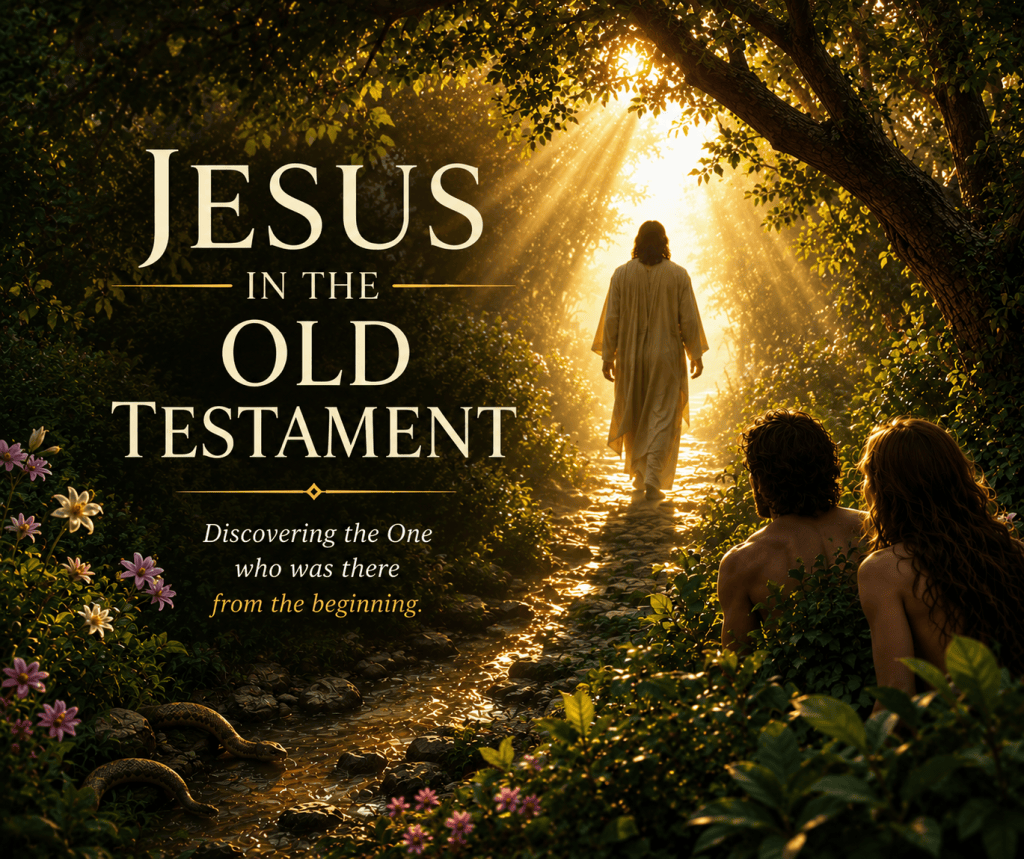
And they heard the sound of the Lord God walking in the garden in the cool of the day (Genesis 3:8).
The thought of God walking bodily with Adam and Eve is one of the most beautiful images in scripture. There is debate over this passage. Is it possible that in man’s pre-fall state Adam and Eve could actually walk in the Garden with God? Is this just metaphorical language? Or is it something else?
Many theologians believe that Jesus was active throughout the Old Testament, and that He was the one walking in the Garden of Eden. These pre-incarnate appearances of Jesus are called Christophanies.
Christophanies are a much debated topic: Theologians don’t agree on how many there were, or even if there were any. There is also debate over which appearances are more likely to be Theophanies or angels.
We are going to briefly touch on a few of them today.
Jesus in the Old Testament
We will start in the book of Genesis and identify some of the major Christophanies through the book of Daniel. From there we will look at the New Testament to see if any of the writers saw Jesus in the Old Testament.
Genesis
We’ll start with the most mysterious one of all. I am talking about Melchizedek. His story comes to us in Genesis 14:17. As Abram was returning from battle, he met the king and priest of Salem.
Melchizedek occupies only a few verses in Genesis, but during this brief encounter he blessed Abram and Abram tithed to him. Although brief, this encounter was important enough that David wrote about it in Psalm 110:4. The author of Hebrews also wrote that Jesus was a High Priest from the Order of Melchizedek, which has led to speculation for centuries.
Many people believe this was a preincarnate Jesus, while others believe he foreshadowed the coming Christ. Most Christophanies are relatively short in duration. There’s an appearance and a conversation, and then it’s over. Melchizedek had a brief encounter with Abram. However, he is presented as an historical king and priest. I tend to lean towards him being a “type” of Christ. There is too much to write about Melchizedek in the scope of this article, if this story intrigues you please read this article I wrote on the subject.
The next three Christophanies all involve Abraham to some extent.
The first one involves Hagar when she ran away from Sarai and encountered the Angel of the Lord near a spring of water (Genesis 16:7-13). The Angel of the Lord convinced Hagar to return to her mistress. The Angel also prophesied to her that she would have so many offspring they couldn’t be counted.
The second one involves the Lord appearing to Abraham as three men who prophesy that Sarah will give birth in one year. Two of the men leave, but scripture says the Lord stayed with Abraham and told him about His plans to destroy Sodom and Gomorrah (Genesis 18). These are both considered by many to be Christophanies. In the case of the three men, there are many who believe this represents the Trinity.
From here we look at the third instance: Abraham’s willingness to sacrifice his son, Isaac. We’ve already discussed the typology here and here, but now we are looking specifically at the Angel of the Lord who appeared and stopped Abraham at the last minute (Genesis 22:11-15).
Was Jesus actually present, and was He the one who stopped Abraham? This is an interesting question! It is interesting that God’s Son, who was not spared, could be the one who spared Abraham’s son.
Now we move on to Jacob, who wrestled with God and apparently won. This is probably the most famous Christophany in the Bible. The narrative starts out simply enough: Jacob meets a man and wrestles with him all night long (Genesis 32:24). There is no indication at this point that there is anything different about this man.
But then in verse twenty-five, the man touched Jacob’s hip socket and put it out of joint. Jacob would limp the rest of his life because of this incident. When the wrestling match was over the man changed Jacob’s name to Israel, and refused to tell him His name. Then he blessed Jacob/Israel.
Jacob saw this man as a supernatural being, saying, “I have seen God face to face, and yet my life has been delivered” (Genesis 32:30).
Many theologians believe that Jacob wrestled the pre-incarnate Jesus.
Exodus
Those are the major examples from Genesis. We are going to continue into Exodus with the burning bush. This one is much debated. Most theologians see this as a Theophany, a visible manifestation of God, as a more likely interpretation. But others still see the more specific Christophany.
There are two main points in the debate. The text in Exodus 3:2 states that it was an Angel of the Lord that appeared in the bush, and this leads some to believe this was the pre-incarnate Christ. However, this is when God revealed His name, YHWH, to Moses, leading others to speculate this was a Theophany.
Numbers
From here we move into Numbers 22:22-35, and we take a look at Balaam’s donkey.
God was upset at Balaam because he was going to see Balak. The Angel of the Lord appeared to Balaam’s donkey and blocked the path. Eventually the donkey lay in the street and refused to move. At this point, Balaam began to beat the donkey.
The donkey began to speak. The Angel of the Lord appeared to Balaam, and asked why he was beating the donkey when He was the one preventing the donkey from moving. Balaam fell down with his face to the ground and apologized.
Balaam submitted to the angel’s divine authority, and the Angel accepted divine reverence. This has led many theologians to speculate the incident was a pre-incarnate appearance of Jesus.
The final examples we have today are all examples of protection and victory. The first two, Joshua and Gideon, are examples of protection and victory in battle.
Joshua
Joshua was going up against a much larger army in the battle of Jericho, but the Angel of the Lord appeared in front of him with a sword in his hand. When Joshua asked if the Angel was for him or against him, he declared he came as commander of the army of the Lord. Joshua fell down and worshiped him.
The Angel, reminiscent of Moses at the burning bush, told Joshua to take off his sandals because he was standing on holy ground. Joshua obeyed and the Lord gave Jericho into his hands (Joshua 5:13-6:4). Many believe the angelic commander of the army of the Lord was the pre-incarnate Jesus.
Judges
The story of Gideon comes to us in Judges 6:11-23: Like Joshua, Gideon was preparing for battle when the Angel of the Lord appeared to him. In this case He was under an oak tree. He said to Gideon, “The Lord is with you, mighty warrior.” Gideon was not immediately convinced. He argued with the Angel.
Eventually Gideon prepared food for the Angel. The food was consumed in fire while it was on the rock. Gideon then fretted he was about to die because he saw the Lord face to face. The Angel comforted him and told him he wouldn’t die. Because Gideon saw the Lord face to face and didn’t die, many believe this was also a Christophany.
The last two examples come from Daniel. They are both examples of God’s protection and victory while standing firm in the belief of God.
Daniel
The first example is the fiery furnace. King Nebuchadnezzar decreed that everybody had to bow down and worship the golden image he has set up when they heard the sound of the horn. Three men, Shadrach, Meshach, and Abednego, refused to do so (Daniel 3:16-17).
King Nebuchadnezzar ordered the three men be thrown in the fiery furnace (3:21), but when King Nebuchadnezzar looked into the fire he saw four men walking around unharmed in the fire, and the fourth was “like a son of the gods” (Daniel 3:25). King Nebuchadnezzar realized that God had sent his angel to protect them (Daniel 3:28). King Nebuchadnezzar believed this was another pagan god, however many theologians believe Jesus was the fourth man in the fire.
The second example is Daniel in the den of lions. King Darius signed a law saying that petitions could only be made to him. Anyone caught petitioning any other god or man would be cast into a den of lions (Daniel 6:7-9). Daniel disobeyed the law by praying to God in a window so that all could see him.
He was cast into the den of lions. When King Darius came to the den of lions the next day, Daniel was still alive. God had sent his angel to protect him. Many theologians believe this angel was Jesus.
New Testament Reinforcement
We are going to finish this study in the New Testament by looking at a few examples that show us that some of the earliest converts to Christianity believed that Jesus was present in the Old Testament.
The first example is Acts 7:30, which reaffirms Exodus, saying it was an angel that appeared to Moses in the burning bush. This angel claimed to be God, and even revealed to Moses His personal name.
Up next is Jude 1:5, which says, “Now I want to remind you, although you once fully knew it, that Jesus, who saved a people out of the land of Egypt, afterward destroyed those who did not believe.” Here, Jesus is being credited with bringing the people out of the land of Egypt.
And from there we go to 1 Corinthians 10:1-4, where Paul claims that Jesus was the spiritual rock that followed the Jews through the desert for 40 years.
Here we have three examples from the New Testament that show the writers specifically tying Old Testament events directly to Jesus Christ. Jesus was with God and was God at the beginning, and He was active throughout the Old Testament revealing the work of the Father before He became flesh and dwelt among us.
If you enjoyed this content please scroll down and comment, subscribe, and share! You can also follow Cross Talk on Facebook by clicking on the link in the sidebar on the Cross Talk home page.


Leave a Reply